
How locks and keys actually work
Shear Line is a plain-language explainer of the small machines on our doors and in our pockets. It shows what happens inside a lock when the right key goes in, how keys and keyways are told apart, and how to choose door hardware and respond calmly when keys go missing. It sells nothing and names no brands.
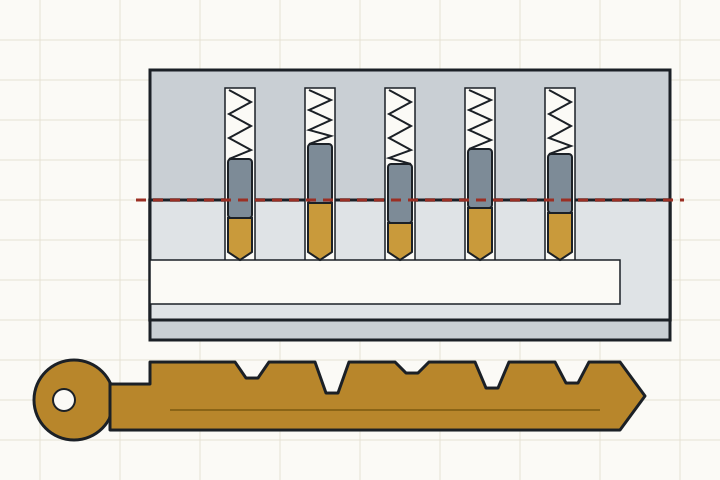
- Pin tumblersTwo-part pins in a row, each lifted by the key until its split meets the edge of the plug.
- WafersFlat plates, one per slot, that the key slides until none of them reaches into the housing.
- DiscsNotched discs the key rotates until every notch lines up under a locking bar.
- LeversPivoting plates the key lifts until their gates line up for the bolt to pass.
Six guides, from the inside of a cylinder to the front door
The first three explain mechanisms and keys. The last three turn to the decisions people actually face: car keys, choosing locks for a home, and what to do after losing keys. Each guide names the documents it is based on and the date it was last checked against them.
-
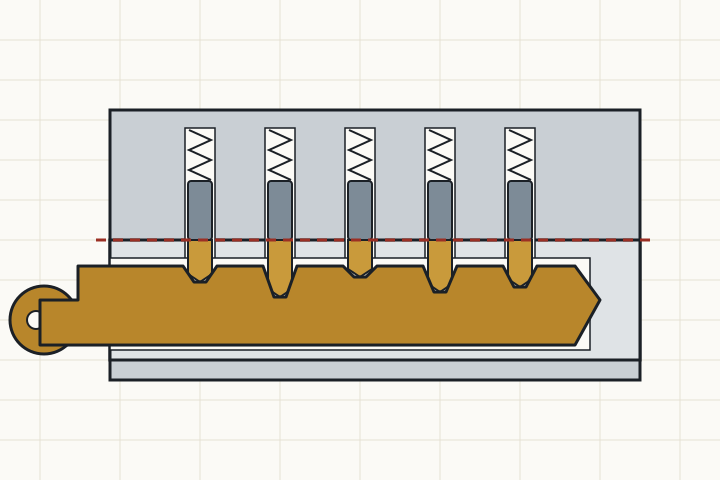
How a pin tumbler lock works
Plug, pin stacks, springs and the line where they part.
-
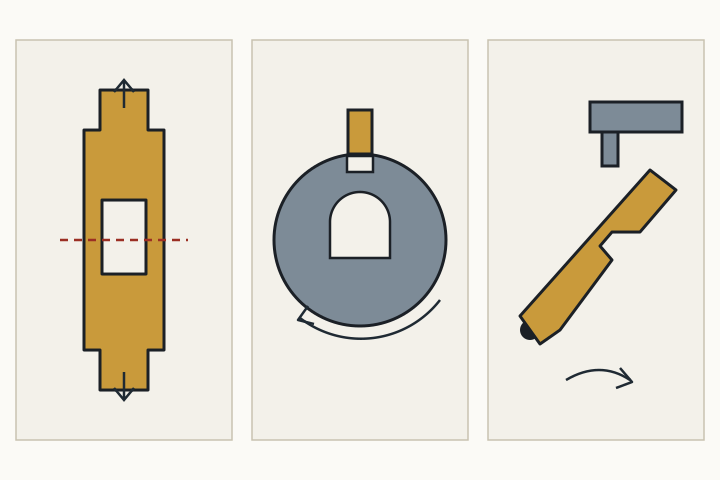
Wafer, disc and lever locks compared
Sliding plates, rotating discs and lifting levers.
-
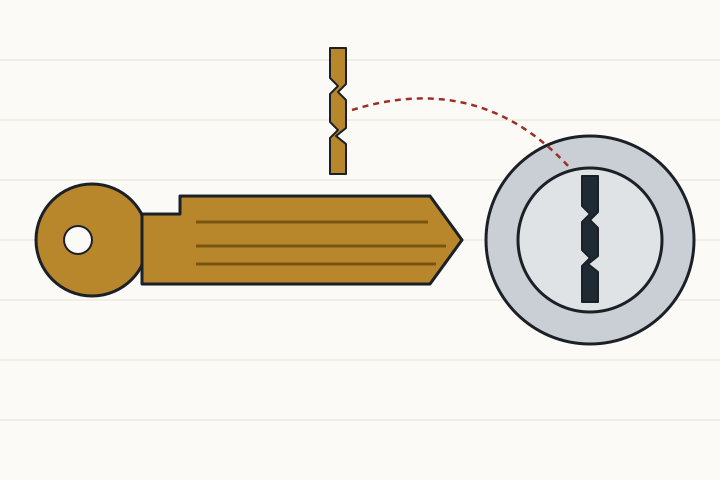
Keys, key blanks and keyways
Blanks, profiles, wards and who can copy a key.
-
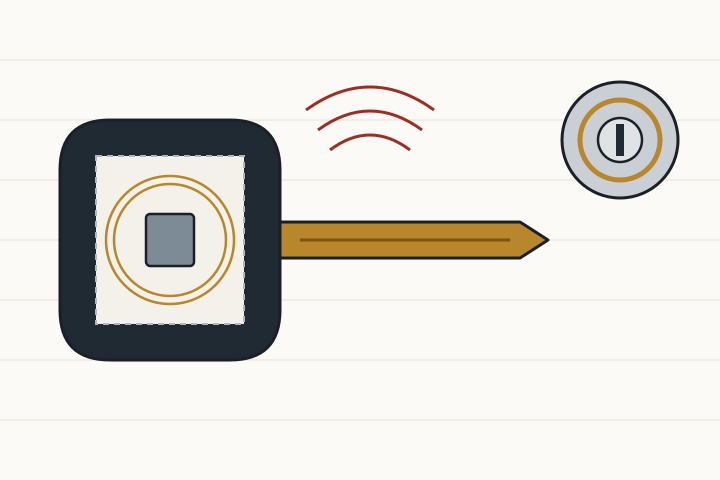
Car locks and transponder keys, in general terms
Immobilizers, chips in keys and what the rules ask for.
-
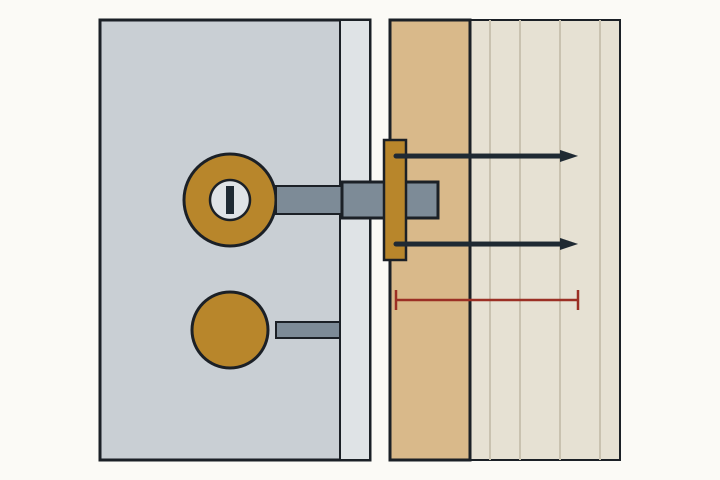
Choosing locks for a home: grades, deadbolts and strike plates
BHMA ratings, deadbolt types and the door frame.
-
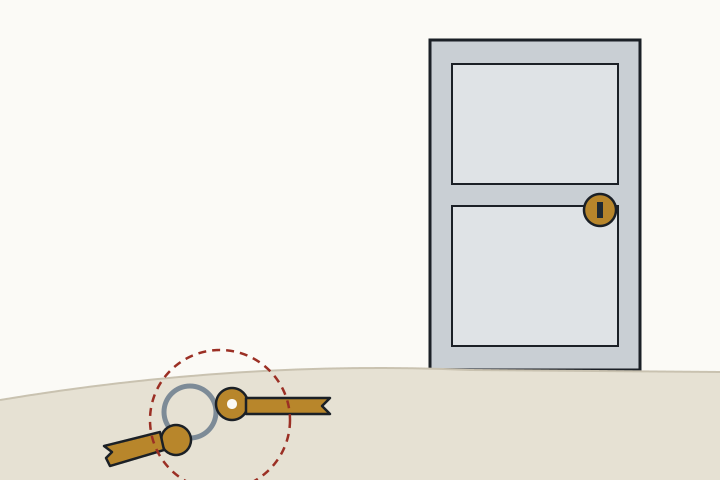
What to do after losing your keys
Changing locks, rekeying and hiring help safely.
Why a lock is secure, never how to defeat one
Every mechanism on this site is explained at the level of a museum label or a patent drawing: what the parts are, how the right key lines them up, and why the wrong key does not. That is enough to understand what you are buying and why some hardware is rated higher than other hardware.
It stops there on purpose. No page describes ways to open a lock without its key, and none gives key cutting measurements.
- Named sourcesPatents, the standards body for door hardware, police crime prevention bulletins, consumer protection agencies and a university program. Each guide lists the documents it relies on.
- No brands, nothing for saleNo product recommendations, affiliate links or advertising. Hardware is described by type and by its published rating, never by maker.
- No locksmith listingsThe site does not recommend or list locksmiths. It repeats what consumer agencies say about hiring one safely.
Lost your keys? Three steps first
- Think about what was on the ringA house key with nothing to identify the address is a different risk from a ring with an address tag or a car key.
- Change or rekey the locksPolice burglary guidance says to change locks straight away when keys are lost or stolen.
- Hire help carefullyConsumer agencies advise a total price before work starts, identification on arrival and an itemized invoice.
The lost keys guide sets out the full order of steps, explains what rekeying means, and covers car keys with chips.